

IFS Cloud innebærer valgfrihet, men også økt ansvar for deg som kunde. Du må ta viktige valg for forvaltning av din IFS-løsning, både for kortere og lengre sikt. I tidligere versjoner av IFS kunne det være krevende å få flere til å samarbeide om ens IFS-løsning, spesielt med hensyn til tilpasninger i applikasjonen. IFS Cloud gir kunden muligheten til å være i førersetet og invitere inn flere samarbeidspartnere som jobber sammen, side om side. I IFS Cloud er det kunden som eier sin løsning, også tilpasningene.
Hvilke valg må man ta?
Kunden må først og fremst velge hva de ønsker å gjøre selv og hva de ønsker å overlate til andre. Ønsker man å ha sterk styring og kontroll, med høy grad av involvering av egne ressurser, eller ønsker man å overlate «mest mulig» til en eller flere partnere? Svaret på disse spørsmålene vil være førende for hvilken partnermodell man velger, både for prosjekt og forvaltning. Ønsker man å kunne forvalte egen løsning, er det viktig å bygge kompetanse, og ta ansvar, allerede i prosjektet.
IFS Cloud har en ny arkitektur. Kundens løsning skal forvaltes på tvers av «Build Place» og «Use Place». Hva skal ligge hvor og hvordan sikres kvaliteten av den totale løsningen? Og hvordan skal man håndtere oppdateringer til nye versjoner på en effektiv måte?
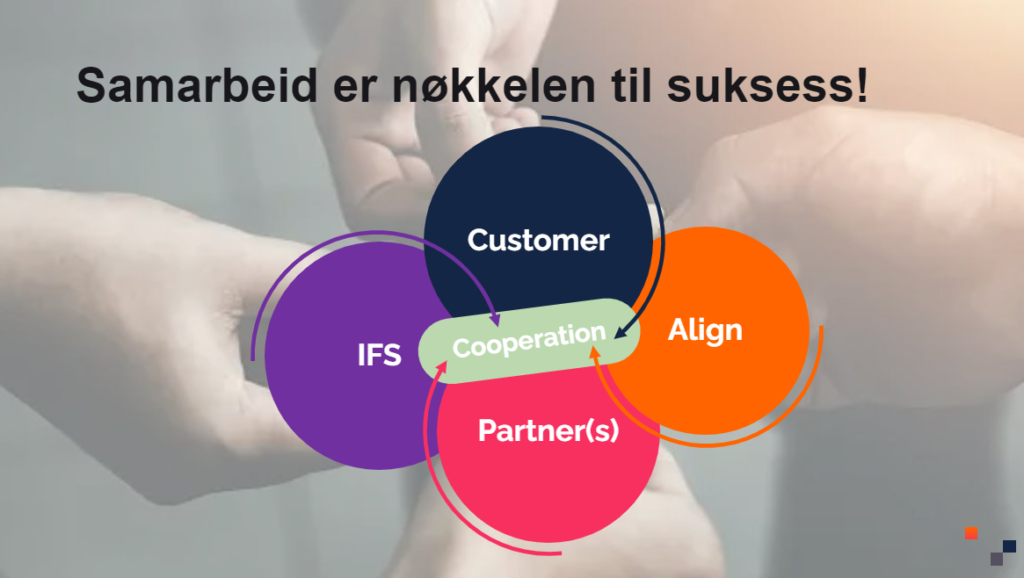
En eller flere partnere? Hva er rett modell for deg?
Du tenker kanskje at det vil være enklere å lykkes hvis man kun har én partner? Det blir mindre koordinering, klarere ansvarslinjer? Slik kan det være, men det har også flere fordeler å ha flere samarbeidspartnere. Å ha flere leverandører øker fleksibiliteten og tilgangen på riktig kompetanse til rett tid. Og økt konkurranse gjør at alle aktørene må være skjerpet.
Hvis du velger å sette bort prosjektet/ forvaltningen til én partner, så er det viktig at denne partneren åpner for ALLE aktørene i økosystemet. Unngå å bli fanget av en monopolist!
God styring er nøkkelen til suksess!
Uansett hvilken partnermodell du velger, så vil vi hevde at veldefinerte løsningsprinsipper og en solid styringsmodell er viktigere enn noen gang. Både for å lykkes med et IFS Cloud prosjekt, og for å sikre at løsningen virkelig forblir «Evergreen» i forvaltningsfasen.
Har man et godt forvaltningsregime, med veldokumenterte prinsipper og rutiner, så blir man også mindre leverandøravhengig og står friere til å bytte leverandør(er).
Så hva slags samarbeidsmodell skal du velge? Det finnes ingen fasit, ikke ett svar som er rett eller feil. Du må velge den veien som passer best for deg og din bedrift. Det viktigste er å gjøre en vurdering og ta et bevisst valg.
Align har god erfaring med å hjelpe kunder med å definere grunnregler og rammeverk for prosjekter der flere parter jobber sammen. Vi ser at stadig flere kunder opplever økt verdi gjennom samarbeid med flere.
Lykke til!